
GenPrime Everlink Fertility Centre welcomes patients from around the world seeking fertility care in Malaysia. As part of the GenPrime network, with branches in Thailand, the Philippines, Singapore, and the United States, we are connected to an international community of reproductive medicine specialists and patient support teams.
Our internationally experienced concierge team works alongside trusted medical tourism partners to support international patients throughout their treatment journey. From the early planning stages before leaving home, to coordination during treatment in Malaysia and preparation for the return journey, we aim to ensure each patient’s comfort, safety, and individual needs are carefully supported.
GenPrime Everlink Fertility Centre also collaborates closely with referring obstetricians and gynaecologists as well as primary care physicians. Many of our patients are referred through these trusted partnerships, and we remain committed to providing careful assessment, clear communication, and treatment planning tailored to each patient’s circumstances.
What Is IVF?
In-Vitro Fertilisation (IVF) is an assisted reproductive treatment in which fertilisation occurs outside the body in a laboratory environment.
The IVF treatment process typically includes:
- Ovarian stimulation
- Egg retrieval
- Laboratory fertilisation
- Embryo development
- Embryo transfer
IVF may be recommended for:
- Blocked fallopian tubes
- Endometriosis
- PCOS
- Male factor infertility
- Unexplained infertility
- Recurrent pregnancy loss
Learn more about In-Vitro Fertilisation (IVF) →
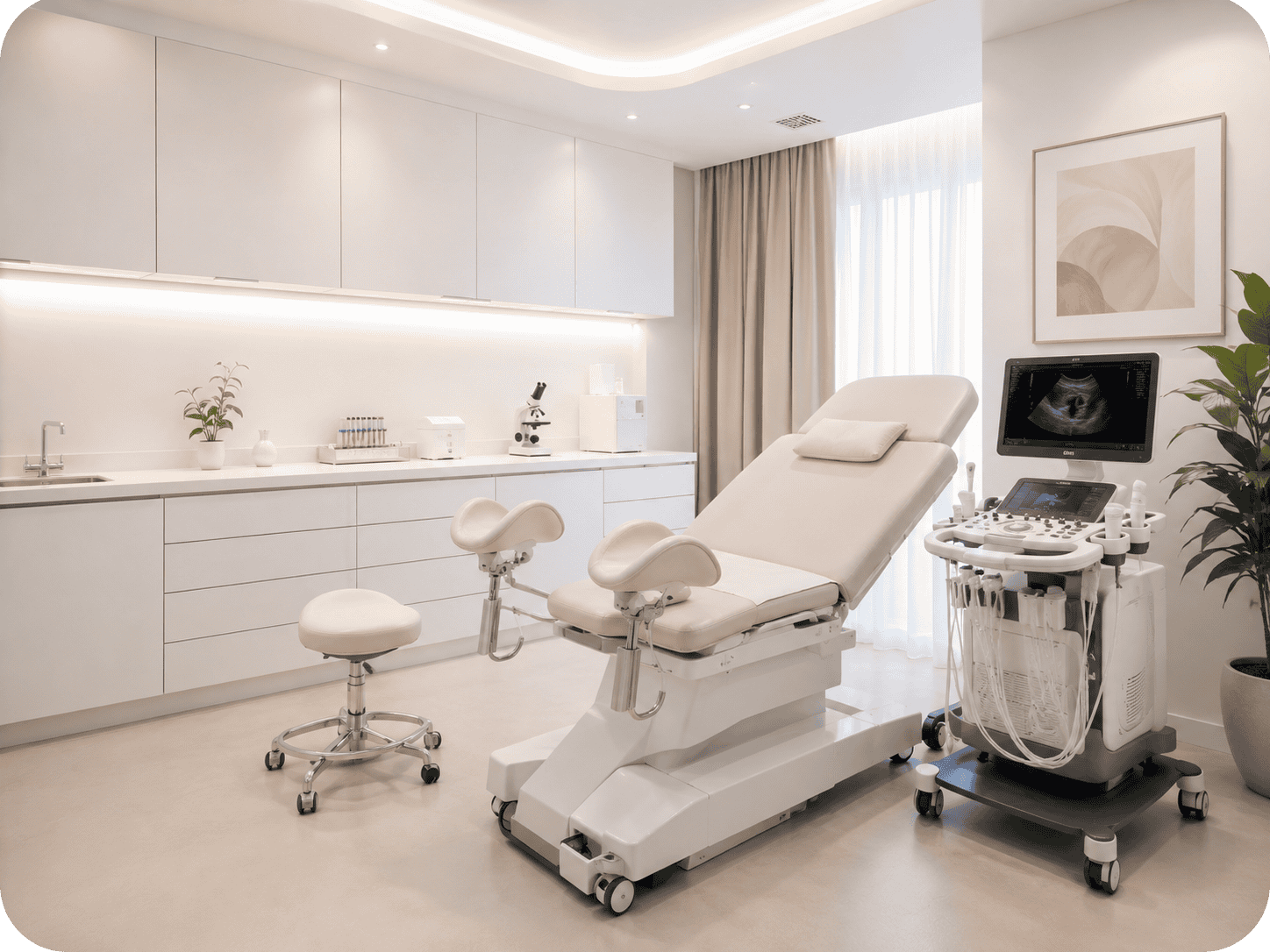
The IVF Treatment Pathway: Step-by-Step
1. Initial Fertility Assessment
Before beginning the IVF treatment process, comprehensive fertility testing is performed.
Assessment may include:
- Hormone testing
- Ovarian reserve evaluation (AMH)
- Pelvic ultrasound
- Semen analysis
- Review of reproductive history
This stage determines whether IVF treatment is appropriate and which stimulation protocol is suitable.
2. Ovarian Stimulation
Ovarian stimulation is the first active phase of the IVF cycle.
Medication is prescribed to stimulate multiple follicles, increasing the number of eggs available for retrieval.
Monitoring during stimulation includes:
- Ultrasound scans
- Blood hormone levels
- Medication adjustments where necessary
Stimulation typically lasts 8–14 days.
Explore IVF Stimulation Protocols →
3. Trigger Injection
When follicles reach the appropriate size, a trigger injection is administered to mature the eggs.
Egg retrieval is scheduled approximately 34–36 hours later.
4. Egg Retrieval Procedure
Egg retrieval is performed under sedation using ultrasound guidance.
The IVF procedure:
- Takes approximately 15–30 minutes
- Is conducted as a day-care procedure
- Allows most patients to return home the same day
5. Fertilisation in the Laboratory
During the IVF treatment pathway, fertilisation occurs in the embryology laboratory.
Two methods may be used:
- Conventional IVF
- Intracytoplasmic Sperm Injection (ICSI)
ICSI involves injecting a single sperm directly into an egg and may be recommended in cases of reduced sperm parameters.
Read about Intracytoplasmic Sperm Injection (ICSI) →
6. Embryo Development
Embryos are monitored for 3–6 days in a controlled laboratory environment.
Embryologists assess:
- Cell division
- Development stage
- Embryo quality
Embryos reaching the blastocyst stage may be selected for transfer or cryopreservation.
7. Embryo Transfer
Embryo transfer is a brief outpatient procedure.
A thin catheter is used to place the embryo into the uterus.
This marks the final stage of the active IVF cycle.

Fresh vs Frozen Embryo Transfer
The IVF treatment pathway may include:
Fresh Embryo Transfer
Transfer occurs within the same IVF cycle as egg retrieval.
Frozen Embryo Transfer (FET)
Embryos are cryopreserved and transferred in a later cycle.
FET may be recommended when:
- Hormone levels require stabilisation
- Genetic testing is performed
- Ovarian response is elevated
Understand Frozen Embryo Transfer (FET) →
IVF Success and Influencing Factors
IVF success rates vary and depend on:
- Maternal age
- Ovarian reserve
- Embryo quality
- Sperm parameters
- Uterine health
While the IVF process in Kuala Lumpur follows structured medical protocols, individual outcomes differ based on clinical factors.
How Long Does the IVF Treatment Process Take?
An IVF cycle typically spans:
- 2–3 weeks for stimulation and egg retrieval
- Additional time if frozen embryo transfer is planned
Complete IVF treatment planning may extend over several months depending on individual circumstances.
Emotional Considerations During IVF
The IVF treatment pathway involves both physical and emotional components.
Common experiences include:
- Anxiety during monitoring
- Hormonal fluctuation
- Emotional stress during the two-week wait
Understanding the IVF cycle step-by-step can help reduce uncertainty and improve preparedness.
When Should You Consider IVF?
You may consider IVF treatment in Kuala Lumpur if:
- You have been trying to conceive for 12 months
- You are over 35 and have tried for 6 months
- You have blocked fallopian tubes
- You have severe male factor infertility
- Previous fertility treatments have been unsuccessful
Frequently Asked Questions
Is IVF painful?
Most IVF procedures are well tolerated. Egg retrieval is performed under sedation.
How many IVF cycles are usually needed?
Some patients conceive in one IVF cycle, while others may require multiple cycles depending on age and clinical factors.
What is the difference between fresh and frozen embryo transfer?
Fresh transfer occurs in the same IVF cycle. Frozen embryo transfer (FET) takes place in a later cycle after embryos are cryopreserved.
Can IVF be combined with genetic screening?
Yes. Preimplantation Genetic Testing (PGT) may be incorporated into the IVF treatment process when clinically indicated.
When Is Genetic Screening (PGT) Considered? →